





Older Adults Responsible for Total Growth in Drug Arrests
Between 2000 and 2018, the steepest declines in drug arrests were observed among youth ages 10 to 14 (–52%) and young people ages 15 to 17 (–56%). Arrest rates among young adults also fell. Specifically, the drug arrest rate dropped –35 percent for 18-20 year-olds and –15 percent for adults ages 21-to 24. Continue reading Older Adults Responsible for Total Growth in Drug Arrests


Twin Cities Pioneer Press — Treating Violence like a Contagious Disease? Some Think this Might be the Way
As Jeffrey Butts, director of the John Jay College of Criminal Justice research and evaluation center in New York City, noted four years ago, “the public health approach of [Cure Violence] CV currently merits the label ‘promising’ rather than ‘effective.’” “CV, however, offers something to communities that other well-known violence reduction models cannot,” he added. “It is potentially very cost-efficient, and it places less demand on the political and administrative resources of law enforcement and the larger criminal justice system. ” Continue reading Twin Cities Pioneer Press — Treating Violence like a Contagious Disease? Some Think this Might be the Way

Youth Still Leading Violent Crime Drop: 1988-2018
Based on the latest statistics compiled by the Federal Bureau of Investigation (FBI), the national violent crime arrest rate declined 38 percent overall between 1988 and 2018, but the steepest declines were observed among youth ages 10 to 14 (–53%) and 15 to 17 (–54%). The arrest rate for 18-20 year-olds dropped 47 percent while the arrest rates for adults ages 21-24 and 25-49 declined 42 percent and 23 percent, respectively. Continue reading Youth Still Leading Violent Crime Drop: 1988-2018
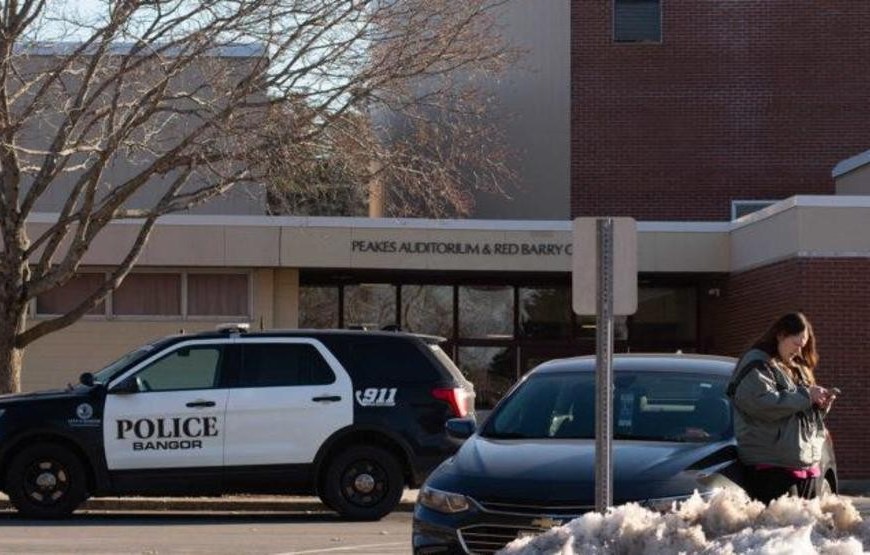
Bangor Daily News — Maine Kids are Actually Bringing Fewer Weapons to School
The decline in possession of weapons at school and in the prevalence of weapon-related threats in schools also holds true for overall juvenile crime, according to Jeffrey Butts, director of the Research and Evaluation Center at the John Jay College of Criminal Justice in New York City. “One popular theory is that the drug trade was much more dangerous 30 years ago. Kids that lived in neighborhoods with active drug sales going on often felt that they needed to have a gun on them to protect themselves,” he said. “The daily threat from street-corner drug sales has gone way down.” Continue reading Bangor Daily News — Maine Kids are Actually Bringing Fewer Weapons to School
 JeffreyButts.net