
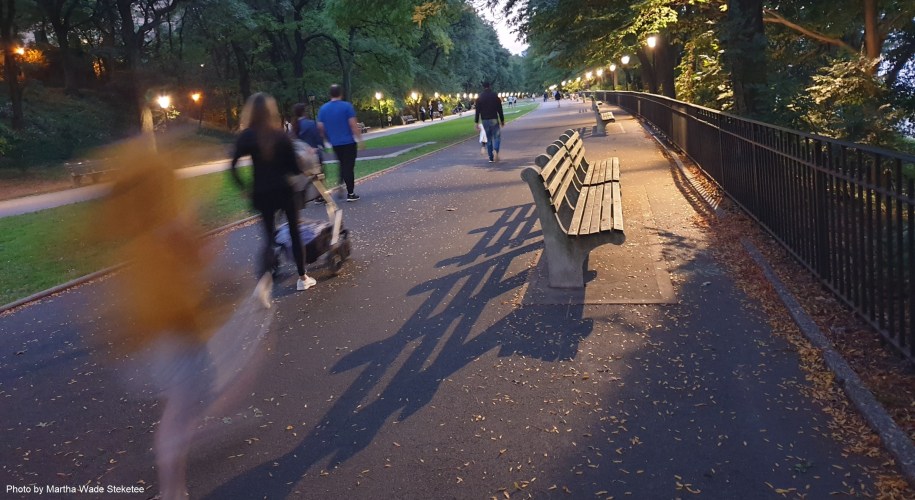


Promoting peace: Street Corner Resources fights violence
“The things that make communities safe have nothing to do with patrol cars and badges.” Continue reading Promoting peace: Street Corner Resources fights violence


Albany’s Justice Reform Agenda: Raise the Age Needs Funding for it to Work
A recent report from John Jay College of Criminal Justice found that the share of felony dangerous weapons offenses committed by people under 18 in New York City has actually decreased since Raise the Age was passed in 2017. Continue reading Albany’s Justice Reform Agenda: Raise the Age Needs Funding for it to Work

Evaluability Assessment of NYC Public Safety Initiatives
In 2023, the New York City Department of Youth and Community Development (DYCD) asked the Research and Evaluation Center at John Jay College of Criminal Justice (JohnJayREC) to examine the City’s efforts across three program domains to assess their current operations and the potential for future evaluations to document their effects on neighborhood safety and the well-being of residents. Continue reading Evaluability Assessment of NYC Public Safety Initiatives

Evidence-Oriented Youth Justice
Butts, Jeffrey A., John K. Roman, and Katheryne Pugliese (2024). Evidence-oriented youth justice. Oxford Handbook of Evidence-Based Crime and Justice Policy. Brandon C. Welsh, Steven N. Zane, and Daniel P. Mears (Editors). New York: Oxford University Press. The Conclusion of our chapter It is facile to characterize youth justice policymaking as choosing programs that work versus those that do not. To meet the foundational goals … Continue reading Evidence-Oriented Youth Justice
 JeffreyButts.net