



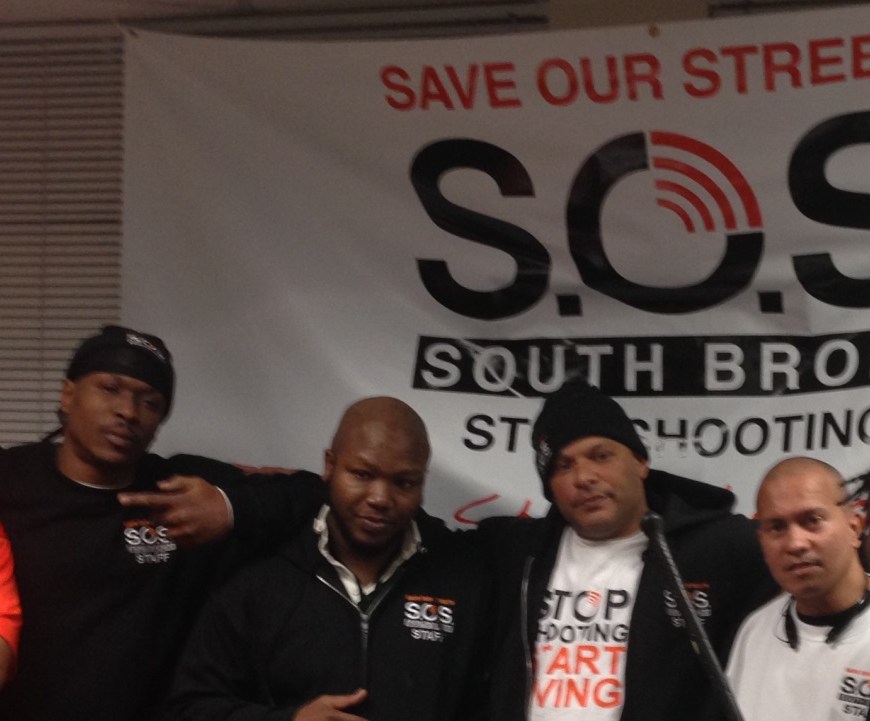
Bronx Ink—‘Violence Interrupters’ Answer SOS in South Bronx
Jeffrey A. Butts, director of the Research and Evaluation Center at the John Jay College of Criminal Justice, echoed Gibson’s assertion that knowing the streets is key for SOS employees. “They have to have some connection to the community that doesn’t make them seem like an outside meddler or do-gooder,” explained Butts. Researchers at his school are currently evaluating the Cure Violence model and its implementation in Crown Heights and the South Bronx. “Some of the programs have successful employees who’ve never been arrested, but they might be the son of a well-known gang leader,” he said. Continue reading Bronx Ink—‘Violence Interrupters’ Answer SOS in South Bronx


Violent Youth Arrests Continue to Fall Nationwide
According to national arrest estimates calculated with data released by the Federal Bureau of Investigation (FBI), law enforcement agencies across the United States made about 53,000 violent crime arrests involving youth under age 18 in 2013, compared with more than 60,000 in 2012. The total number of violent youth crime arrests fell eight percent overall, led by a decline of 12 percent in arrests for aggravated assault. Continue reading Violent Youth Arrests Continue to Fall Nationwide

Strengthening Youth Justice Practices with Developmental Knowledge and Principles
Youth justice is a challenging environment in which to implement a rigorous PYD approach. The insights and lessons of developmental science do not translate easily into the day-to-day tasks of youth justice systems, which often focus on control and compliance. Youth justice practitioners require assistance as they apply developmental principles. The Positive Youth Justice (PYJ) Model was developed to meet this challenge. It provides a simple framework for designing PYD-compatible interventions for justice-involved young people and for supporting youth justice reforms. Continue reading Strengthening Youth Justice Practices with Developmental Knowledge and Principles

Out-of-Home Placements Falling Among Younger Juveniles
Before 1995, placement rates among all delinquency cases were somewhat similar, although the rate among 17-year-olds was not declining as much as the rate for younger youth. After 1995, placement rates for 17-year-olds remained stable, while the rate among youth ages 16 and younger continued to fall sharply. Among adjudicated cases and adjudicated cases involving person offenses, the difference was marked. Continue reading Out-of-Home Placements Falling Among Younger Juveniles
 JeffreyButts.net