
For a week each quarter, 911 calls are routed to community violence interrupters. A new analysis found that precincts with these programs saw a marked drop in shootings.
By Chip Brownlee
The Trace
May 13, 2025
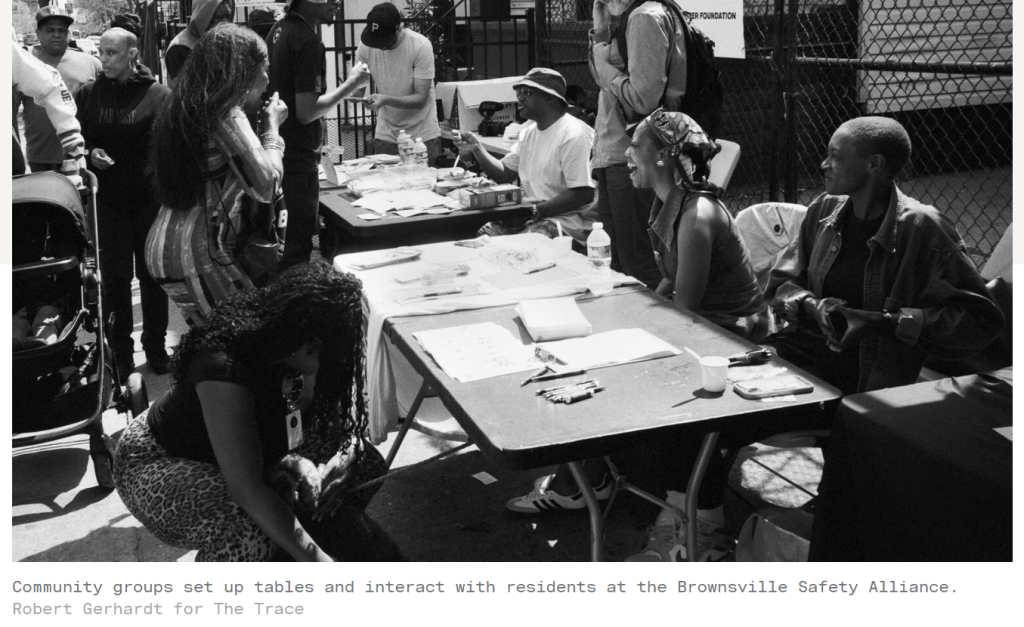
… The city has expanded the CMS significantly, both in funding and geographic reach, over the past decade. Its budget has grown from $4.8 million in its first year to nearly $100 million today. And its footprint has expanded from just a handful of neighborhoods to 29 police precincts. But that’s out of 77 total precincts, meaning most neighborhoods still don’t have city-funded violence interrupters.
… An expansion could benefit the city in other ways, too. “Any shooting costs about $300,000 minimum, and that’s not even assuming that there was an injury as a result,” said Jeffrey Butts, a researcher at the John Jay College of Criminal Justice and director of the John Jay Research and Evaluation Center. “You’ll see that these programs are much cheaper than taking the same amount of money and investing it in expanded enforcement.”
While the comptroller’s report is one of the most comprehensive reviews of the system to date, its methodology doesn’t provide definitive evidence of cause and effect, a high bar that’s challenging to reach in social science.
“That’s always difficult,” Butts told me. Still, Butts said, the study adds to a growing body of promising evidence suggesting that CMS helps reduce violence in the Big Apple. But it’s not a magic solution, he said. “These programs are important,” he said, “You don’t shift everything into CMS and forget about all other support sectors, but it’s certainly worth the money that the city spends.”
_____________________________________________________
[ read the article ]
 JeffreyButts.net