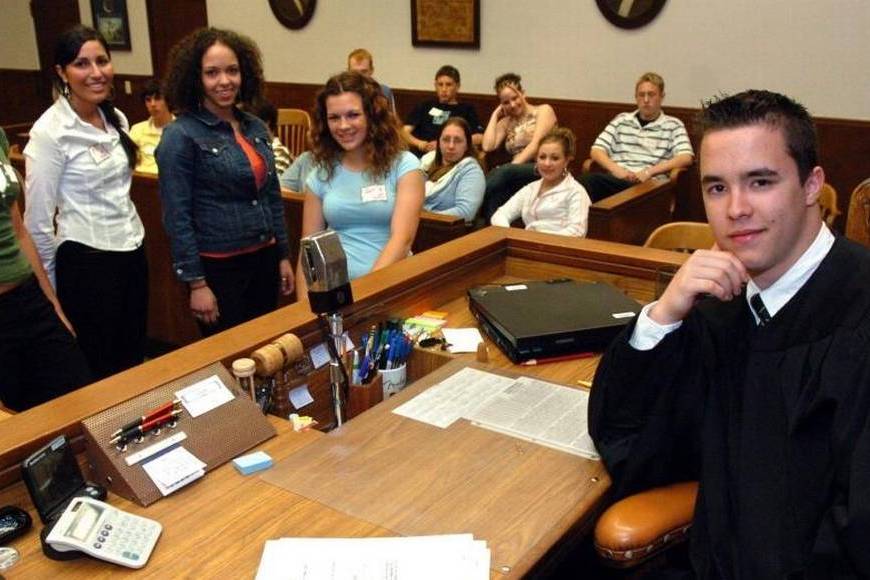
New York Times—Where Teens Find the Jury Isn’t Rigged

“The most powerful factor is peer support for pro-social behavior,” said Jeffrey Butts, one of the authors of the Urban Institute study, who is now the director of the Research and Evaluation Center at John Jay College of Criminal Justice in New York. “When a judge controls the room — that’s what their whole life is like. That’s no different than high school.” Continue reading New York Times—Where Teens Find the Jury Isn’t Rigged

New York Times—Fewer Teenagers in Lockups

While many states have refashioned their policies, some continue to lock up teenagers despite declining violent crime rates. An analysis of the most recent federal data by the Research and Evaluation Center at John Jay College of Criminal Justice shows that only 1 in 20 arrests of young people are for serious, violent crimes like murder, rape or aggravated assault. About 80 percent of those taken in state custody are locked up for drug offenses, misdemeanors or property crimes. Continue reading New York Times—Fewer Teenagers in Lockups

Associated Press–Town Deals with Rising Felons

“These poor, minority kids always fall between the cracks,” says Jeffrey Butts of Chapin Hall, a child and family research center at the University of Chicago. “Their law violations scare away child welfare agencies, but most times their initial crimes are not serious enough to merit aggressive intervention by the juvenile justice system.” What to do, then, in cities like Daytona? “We’ll never have the tax base and political will to bring outside solutions into every neighborhood,” Butts says. “What it takes is creative organizing — to find positive people in each community and to build them into a force for change.” Continue reading Associated Press–Town Deals with Rising Felons

New York Times – Hey Judge, Aren’t You in My Math Class?

A 2002 study by the Urban Institute, a social policy research group, compared nearly 500 juveniles referred to teenage courts with an equal number of juveniles accused of similar offenses who had gone through the regular juvenile system. The study found that the recidivism rate among youth court participants ranged from 6 to 9 percent compared with 18 percent for those handled in traditional courts. Continue reading New York Times – Hey Judge, Aren’t You in My Math Class?